A Prayer about Racial Issues (Or, A Prayer That’s Scary to Pray)

A couple weeks ago, I received an email from one of the pastors in my local church. He asked if I could lead a prayer at our upcoming evening worship and prayer service. (We have one of these every month.) The area he asked me to pray for is one I’m passionate about: the racial issues in our country. I was honored to be asked. But the overwhelming feeling I had when I responded with my โ€œyesโ€ was fear and dread. Our church is predominantly white; the demographics of our congregation reflects the demographics of our city (which is statistically one of the whitest cities in America). Let me be clear: I LOVE my church! It’s a great church with wonderful people. But what was being asked of me was still terrifying. I voiced my fears to my husband:

  • “How on earth am I supposed to lead a congregation to pray as one about something in which weโ€™re so divided?”
  • “How do Iโ€”a woman of color in a predominantly white spaceโ€”lead a prayer about racial issues in a way that won’t get labeled ‘divisive,’ but is still honest and genuine?”
  • “What happens if this doesnโ€™t go well?” (This was my biggest question/worry. Did I mention that my husband’s on pastoral staff at this church?)

I labored over the words I’d pray, crafting the words while whispering again and again, “God, I can’t do this. Please help me!” He gave me words. And I prayed them on my own each day leading up to the service. Alone in my living room, I felt the weight of the words. This is not a safe prayer, I thought. I felt something else, too. Something beautiful was happening.

Last night, as I walked up the steps of the platform to lead our congregation in prayer, my heart raced and I unsuccessfully fought to stop shaking. In my fearโ€”yes, I did it scared!โ€”I kept my head down and my eyes on my iPad. As I prayed, I heard something I hoped for but didn’t expect: voices rising in agreement. There were only a couple times when I felt the crowd get quiet. My husband prepared me for this: “There will be moments when they’ll get quiet because they don’t know yet how to pray about some of these things. They’ll get quiet so they can listen and learn. It’s a good thing. Just keep going.” I remembered his words and kept going all the way to the “amen.” Something indeed happened last night. It felt as though something hard that needed to be broken was beginning to break. This is just a beginning. I wrote in my journal after I got home, “I feel itโ€”really feel it. Hope.”

After the service, a number of people asked if I could send them a copy of what I prayed. This morning, I got more messages with the same request. So here it is. What follows are the words I spoke and prayed (including a couple notes to myself to breathe) at Central Assembly in Springfield, Missouri on the evening of Sunday, February 6, 2022. May we continue to pray these words. And as we do, may we learn to live them.

Photo by Pixabay on Pexels.com

Weโ€™re going to pray about the racial issues in our country. [Take a breath.] And I know that as soon as I said those words, every single one of us felt something and our minds got loud with ideas and beliefs. And the range of thoughts is so wide that it can seem too insurmountable for us to be able to pray as one.

So hereโ€™s what weโ€™re going to do:

  • Everyone, hold out your hands in front of you, and clench your fists. (No hitting! Weโ€™re not about to fight each other!) Prayerfully imagine that in your fists are all the things you think and feel when you hear the words, โ€œracial issuesโ€โ€ฆbecause weโ€™re not going to be able to pray as a unified voice until we deal with what weโ€™re holding in our fists. 
  • As I begin, I want you to pray, โ€œGod, hereโ€™s all my stuff. I want to give You access to all of it.โ€  And when Youโ€™re ready, I invite you to open your hands in surrender to Jesus. If you need more time before youโ€™re ready, thatโ€™s okay. The important thing is that we all move a little closer to God in this moment.

Letโ€™s pray:

God, weโ€™re symbolically holding in our fists 

  • ways we believe weโ€™re right and others are wrong,
  • ways weโ€™ve allowed ideologies to hinder us from loving well,
  • maybe feelings of apathy or annoyance, 
  • or a desire for things to be better and exhaustion by the weight of it all,
  • maybe disillusionment, anger, or disappointment in our brothers and sisters in Christ, 
  • maybe pain or even trauma. 

Some of the things weโ€™re holding are right in Your eyes and some are not. For most, what weโ€™re holding is complicated. And all of it needs to be surrendered to Youโ€”whether for repentance, or so You can sanctify it to be used for Your glory, or so You can do Your miraculous healing work. 

So God, hereโ€™s all our stuff. Help us surrender it all to You.

If you feel ready, go ahead and open your hands and pray with me:

Jesus, we surrender it all to You. We give You access to all of it. Align our hearts to Yours and let Your will be done in and through us.

So now we lift up our church, our community, and our nation.

God, we lift up the Black community.

We lift up the Native American community.

We lift up the Latino community.

We lift up the Asian American and Pacific Islander community.

We lift up everyone whoโ€™s part of the majority culture.

The needs are many.

We pray for demonic strongholds to be destroyed. Break the strongholds of racism and white supremacy in our country and even our churches. Disturb what needs to be disturbed and change hearts. 

We pray for repentance to continue and to be thorough. Weโ€™ve come a long way, but still have far to go. Help us to repent and bear fruit in keeping with repentance. As Daniel, Nehemiah, and others repented for the communal sins of Israel, we repent of our nationโ€™s sins as well as our own.

  • In commenting on MLKโ€™s โ€œI Have a Dream Speech,โ€ Mrs. Coretta King said: โ€œAt that moment it seemed as if the Kingdom of God appeared. But it only lasted for a moment.โ€ God, there was a moment when it felt like we were on the brink of racial healing, but it only lasted for a moment, and too many returned to business as usual. 
  • We repent of our prejudices, the ways weโ€™ve wrongly judged, painted groups of people with broad strokes, or turned people into demeaning caricatures. We repent of the actions and inaction that flowed from these ways of thinking. 
  • We repent of disobeying your command to care for the foreigner and the ways weโ€™ve treated ethnic minorities like they are โ€œotherโ€ and do not belong.
  • We repent of the ways weโ€™ve upheld or been complicit with unjust systems.
  • We repent of choosing to be colorblind when the dream of Your Kingdom is not one of ethnic erasure but one that envisions every nation, tribe, and language worshiping together before Your throne. Give us eyes to be color brave, to see the beauty of our ethnicities and the ways they reflect the image of God.
  • We repent of choosing comfort over bravery. 
  • We repent of participating in racial jokes or degrading comments, whether we were the one speaking the words or were complicit with our laughter or silence.
  • We repent of being silent when we should have spoken up in either correction or encouragement. 
  • We repent of getting so caught up in ideologies and partisan talking points that weโ€™ve allowed ourselves to treat peopleโ€”fellow bearers of the image of Godโ€”as though theyโ€™re the enemy.
  • We repent of getting so caught up in debate that we fail to listen, show empathy, compassion, and love.
  • We repent of treating racial issues as though theyโ€™re problems โ€œout thereโ€ and neglecting to care for those among us who are hurting.
  • We repent of the times weโ€™ve prayed without action and the times weโ€™ve acted without prayer. 

I pray for us to not settle for superficial peace, but to be agents of healing and justice. 

  • Give our lawmakers the wisdom to correct unjust laws and systems.
  • Raise up more Christians like Bryan Stevenson to advocate for the victims of our unjust laws and systems and work towards equity.
  • I pray for the violence against Black and brown bodies to stop. Oh, God, we denounce violence in all its forms. We denounce violence thatโ€™s inflicted on anyone. This week, with the start of Black History Month, at least 13 Historically Black Colleges and Universities were forced to close due to bomb threats. Oh God, we cry out for true peace in our land. As we often pray for a shield of protection when we travel, we pray for a shield of protection around ethnic minorities.
  • In โ€œLetter from Birmingham Jail,โ€ Martin Luther King lamented, โ€œSo here we are moving toward the exit of the twentieth century with a religious community largely adjusted to the status quo, standing as a taillight behind other community agencies rather than a headlight leading men to higher levels of justice.โ€ Oh God, may we be a headlight leading people to higher levels of justice! Give Your Churchโ€”here at Central and throughout our countryโ€”the wisdom and anointing to be brave in calling out unjust attitudes and systems, to be brave in doing the work of racial reconciliation, and to be brave in praying for and working towards shalom in our land. Holy Spirit, lead us and help us lead the way. 

[Take a breath.]

Since the start of the pandemic, thereโ€™s been a drastic rise in Anti-Asian violence. Asian Americans have been bombarded with videos of people who look like us and our parents being attacked and murdered. A couple months ago, there was news of an Asian man who was shot multiple times. He was about my fatherโ€™s age and was killed in Chicagoโ€™s Chinatown, a place my father frequents. So when I saw the news headline, without thinking, I instinctually looked up the details of the story to make sure it wasnโ€™t my father. This is a glimpse of what racial trauma looks like.

Jesus, we lift up those who are hurting and suffering racial trauma. 

  • Weโ€™re hurting. And sometimes the pain is too heavy and hope feels impossible. Oh Jesus, You understand wounds. So we welcome You into our pain and we bring You our lament. We bring You all our anger and frustration, all our why-s and how longs. 
  • We pray for every BIPOC person who is carrying trauma in their bodies and their spirit. God of all comfort, I beg You to heal us. 
  • Help us as we absorb yet another insensitive comment, dirty look, or hurtful action. Keep our hearts soft and our armors strong. May we forgive and, at the same time, not internalize the racism we experience.
  • Help us when the news of another assault or murder triggers our trauma and fear. 

Our Father, thereโ€™s so much brokenness. But You are the Lord of righteousness and justice, God of miracles and infinite possibility. Heal our land. Amen.
Our Essence: The Imago Dei

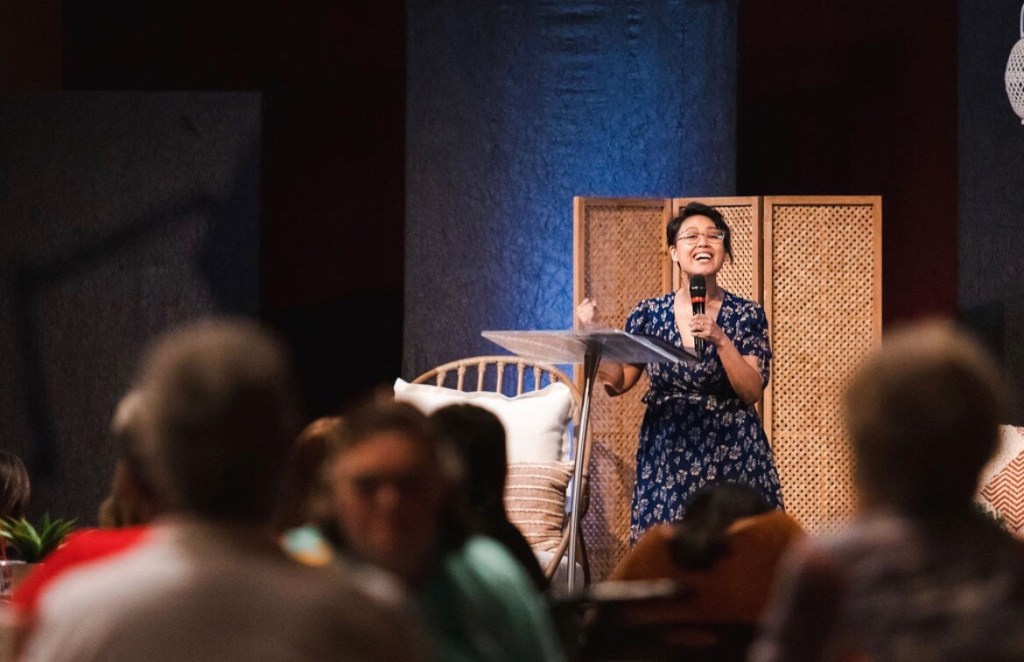
On September 10, 2021, I spoke at an event at Central Assembly in Springfield, MO. These are the words I shared that day.

Iโ€™m going talk to you about something thatโ€™s a lot bigger than what I can give you in 10 minutes. So I want to whet your appetite and stir in you a holy curiosity that I pray will shift the way you read the Bible and interact with God, the way you see yourselves, and the way you love others.

Sometime ago, I was watching a Netflix documentary about American Christianity. In it, someone said, โ€œIn our essence, we are sinful.โ€ That sounds spiritual, but is it true? Is our essence, who we are at our core, our sinfulness? Is that how God sees us? And as Christians, is that how God wants us to see ourselves and others? 

To answer that, letโ€™s go to the Bible. And letโ€™s start at the beginning. 

Genesis 1:1, the opening line of Scripture, says, โ€œIn the beginning God created the heavens and the earth.โ€ Right away, we meet the main character of the Bible, the hero of the story: God. And this chapter proceeds to tell us how God created everything in the cosmos. Light, land and sky, day and night, sun and moon, seasons and years, the plant and animal kingdomsโ€”He spoke it all into being. And as He created, He declared His creation good.

And in Genesis 1:26-27, we meet more characters:

“Then God said, ‘Let us make mankind in our image, in our likeness, so that they may rule over the fish in the sea and the birds in the sky, over the livestock and all the wild animals, and over all the creatures that move along the ground.’ 

So God created mankind in his own image,

in the image of God he created them;

male and female he created them.”

With these verses, we read the beginning of our story. And the very first thing thatโ€™s said about humanity is that weโ€™re created in the image of God. God didnโ€™t speak humanity into being. He formed the first human from dust and breathed life into Him. 

If you ask a lot of Christians about their theology, what they believe, many would begin in chapter 3 with the fall of man. This is how many of us were taught to share the Gospel. But when we do this, we miss out on the theological richness in the first two chapters of Genesis where weโ€™re introduced to threads that are woven throughout the entire Bible, threads that are important for understanding who God is and who we are. And one of those threads is the idea of the imago Dei, the image of God. 


What is the imago Dei? What does it mean to be โ€œcreated in the image of Godโ€?  

When we read the story of creation, God creates a lot of amazing, awe-inspiring things that reflect Godโ€™s glory. But not everything is created in Godโ€™s likeness. God chose humankind to be the bearers of His image.

The idea of the imago Dei flies in the face of a culture that gives people worth based on things like appearance, platform, productivity, and status. Dr. Jemar Tisby wrote, โ€œ…the Christian doctrine of the image of God teaches that all people have inherent worth and dignity simply because they are Godโ€™s creation.โ€ 

So what are ways we see the image of God in us? 

We see it in our capacity… 

  • to think and reason,
  • to forge relationships and emotionally connect with God and others,
  • to have authority and responsibility over the earth through our vocation, care for our health and wellness, and stewardship of our resources,
  • to become more and more like Jesus until we meet Him face to face. (from Christian Spiritual Formation, by Diane Chandler)

Every single one of us is a bearer of the imago Dei, created in the image of God. THAT is our essence. We reflect Godโ€™s image in the ways weโ€™re similar and also in the ways weโ€™re different. Our different stories and backgrounds, the different generations we were born to be part of, our different gifts and passions, even our different races, ethnicities, and nationalitiesโ€”they all come together to make a beautiful mosaic that reflects God.

At this point, you may be thinking, But what about original sin? In Genesis 3, when Adam and Eve disobeyed God and ate the forbidden fruit, sin entered the world. Did that change our essence? Did sin erase the image of God in us?

Well, what does the Bible have to say about the imago Dei after the fall?

Genesis 5:1 says, โ€œThis is the written account of Adamโ€™s family line. When God created mankind, he made them in the likeness of God. He created them male and female and blessed them.โ€

When talking about why murder is wrong, in Genesis 9:6, God said, โ€œWhoever sheds human blood, by humans his blood will be shed, for God made humans in his image.โ€

In the New Testament, when talking about how difficult it is to control the tongue, James 3:9 says, โ€œWith the tongue we praise our Lord and Father, and with it we curse human beings, who have been made in Godโ€™s likeness.โ€

Sin fractured our identities, marred the imago Dei in us, but it did not erase it. Even in our brokenness, we still bear the image of God!

This is the tension we live with: In our essence, we are bearers of the image of God. And at the same time, we live in a fallen world, impacted by sin. And because of that, Romans 3:23 says โ€œ…for all have sinned and fall short of the glory of Godโ€ฆโ€ We donโ€™t live up to our potential as image bearers. 

But God has not given up on us. He invites us to follow Him and partner with the Holy Spirit in His transformative work in our lives.

And like a masterpiece painting that has become cracked, weathered, and faded, weโ€™re still a masterpiece. And God, the master Creator and artist who loves His creation deeply, can restore what has been marred to once again look like the image He created us to bear. 


Before I continue, Iโ€™d like to speak from my heart. The past 18 months have been difficult for all of us. In many ways we deeply feel the pain of living in a fallen world. One way is in the racial divisions that have been brought into the light. Some of you in this room may feel like your dignity and worth or the dignity and worth of your children have been torn down. Maybe youโ€™re carrying the wounds of trauma and you feel emotionally exhausted this evening. If thatโ€™s you, I invite you to find me laterโ€”or message meโ€”and Iโ€™d like to personally take the time to give space for what youโ€™re experiencing. 

And for all of us in this roomโ€”or everyone reading this blogโ€”I exhort you: Let us practice and model to a hurting and broken world what it looks like to see and value the imago Dei in ourselves and in others.


Now, letโ€™s talk about Jesus.

There is only one person in all the world and history who has ever completely and perfectly borne the image of God. His name is Jesus. 

Colossians 1:15 (CSB) says,

He is the image of the invisible God,

the firstborn over all creation.

I love how plainly The Kingdom New Testament Translation, by N. T. Wright, says it:

โ€œHe is the image of Godโ€ฆโ€

Diane Chandler wrote, โ€œ…Jesus is the perfect image that humankind lost during the fall but through whom humankind now is alive with potential for restoration through redemption and is capable of holistic growth into the image of Christ.โ€ (from Christian Spiritual Formation)

Romans 8:29 talks about how weโ€™re to be โ€œconformed to the image of [Godโ€™s] son.โ€

And 2 Corinthians 3:18 says, โ€œWe all, with unveiled faces, are looking as in a mirror at the glory of the Lord and are being transformed into the same image from glory to gloryโ€ฆโ€

In other words, whatโ€™s the goal? To look more and more like Jesus!

And how do we do that? Through Jesus!

Letโ€™s take this one step further: On this road of spiritual formation, we need Jesus…and we need each other. 

Godโ€™s character and nature, His personality, His passions, the way He expresses Himself and interacts with His creation and with usโ€”Heโ€™s so much bigger than what any one of us can reflect. So itโ€™s vital that on the road of spiritual formation, we not try to do it all on our own, but that we do it together in community. And that means it might get a little messy because people are messy. But even in the messiness, and many times, through the messiness, Godโ€™s transformative work happens and we begin to look more like Jesus and better reflect the imago Dei, both individually and corporately.

So letโ€™s do this! And letโ€™s do this together!

Another pic from that night. This is me and Amelia Umbenhowerโ€”one of the leaders in our college ministry. I’m super blessed to get to know her and all the ways God is mighty in her! We’re two women with different backgrounds, stories, and giftings. And we’re both bearers of the image of God!

Reclaiming My Ethnic Identity

A few months ago, in “An Asian American’s Awakening, I wrote these words:

So Iโ€™ve made a decision: Iโ€™m not hiding anymore. What does that mean? Honestly, Iโ€™m not completely sure. Iโ€™m just going to let this journey take me where it will. Hereโ€™s what I do know: I bear the image of God and Iโ€™m not going to be a part of tearing down the imago Dei in me anymore.

What follows is a continuation of this journey of reclaiming my identity and an invitation for you to do the same.

When I was in high school, my history teacher talked about the Filipino “savages” that came at Magellan the explorer with their clubs shouting, โ€œOoga, Ooga!โ€ I will never forget my humiliation as my classmates turned and looked at me. In that moment, I felt ashamed to be a Filipina, and even more shame for feeling ashamed. So when I stumbled on a collection of poems by Justine Ramos, a Filipina American author, with a piece called, โ€œFerdinand Magellan,โ€ I knew I had found something special. In sharing her own Magellan story, I could feel the tension in her body and the wrestling with her identity as the other students in the class stared at her. And in reading her story, I was also reading mine.

Telling our stories is important. And something powerful happens when we see ourselves in the stories of others.

But what happens when we’ve mostly been erased from the stories that are told, when the only time we make it into the narrative, we’re villains and “savages”?

Both of my parents immigrated to the States from the Philippines, so Iโ€™m second generation American. I grew up in the Chicagoland where many of my closest friends were also second generation Fil-Ams (Filipino Americans). We werenโ€™t related, but they were my sisters and brothers and their parents were my titas and titos. Our parents spoke to us in Tagalog; we answered in English (with some Taglish thrown in). We lived in America, but we were tethered to the Motherland. 

Now I live in Springfield, MO, one of the whitest cities in America. Iโ€™ve code switchedโ€”hidden my Filipinaness and acted more white in order to blend into white spacesโ€”for so long that I feel disconnected from an important part of my identity. I miss Tagalog, sitting down at a table where patis (fish sauce) is one of the condiments, and being greeted with the words, โ€œKain na!โ€–โ€Letโ€™s eat!โ€ I miss eating with my kamay (hands). I miss fancy events where men wear barongs, women wear dresses with big sleeves, and people dance the Tinikling. But most of all, I miss feeling at home in my Filipinaness.

So now, months before I turn forty years old, Iโ€™m reclaiming my ethnic identity. It isn’t easy. (I have one Fil-Am friend where I live. One. Two if you count her four-year-old daughter.) Iโ€™ve been listening to podcasts to learn Tagalog grammar so I can finally be able to formulate my own sentences aside from the ones I know only because I heard them a million times growing up. Iโ€™m reading books that tell stories and details that have been left out of American textbooks. (How old were you when you learned about the Philippine-American War or that the Philippines was colonized by Spain and then the United States?) And Iโ€™m exploring art, movies, music, and poetry where I see reflections of my ancestors, culture, and myself.

It’s time to reclaim my story. It’s time for all of us to reclaim our stories.

A BOOK FOR ALL ETHNICITIES:

Becoming All Things: How Small Changes Lead to Lasting Connections Across Cultures, by Michelle Ami Reyes

If you want to understand the importance of all of our ethnic and cultural heritages in a theologically robust way, this book is a goldmine! Here are a couple of my favorite excerpts:

โ€œNo matter your ethnicity, skin color, or cultural values, you have been made as a bearer of Godโ€™s image with dignity and worth equal to every other person. If you donโ€™t value your cultural identity, you are not valuing a vital aspect of the image of God within you. If you donโ€™t value the cultural identity of another person, you are not valuing the image of God within him or her.โ€

โ€œThe words of Scripture challenge us to step into other peopleโ€™s histories and stories, to see through their eyes, to mourn for their pain, and to build better futures for one another. Justice is not a distraction from the gospel. It is a core message of the gospel. The life of Jesus declares this to be true, and if you want to prioritize the gospel in your life, then the pursuit of justice on behalf of others must be an essential component of your faith. Like Paul, become the weak. See the world through their eyes. Only then will people truly begin to see Christ in you.โ€

A COUPLE BOOKS FOR THE FILIPINX DIASPORA:

Full disclosure: Iโ€™m not a fan of expletives and I typically donโ€™t recommend books that contain language I wouldnโ€™t use. However, there are some exceptions and these books are among them. The expletives and strong language in the following books are minimal. And they serve the purpose of historical accuracy (such as quotations from historical figures) or expressions of intense emotion. But if you have a zero tolerance policy when it comes to strong language, these books may not be for you.

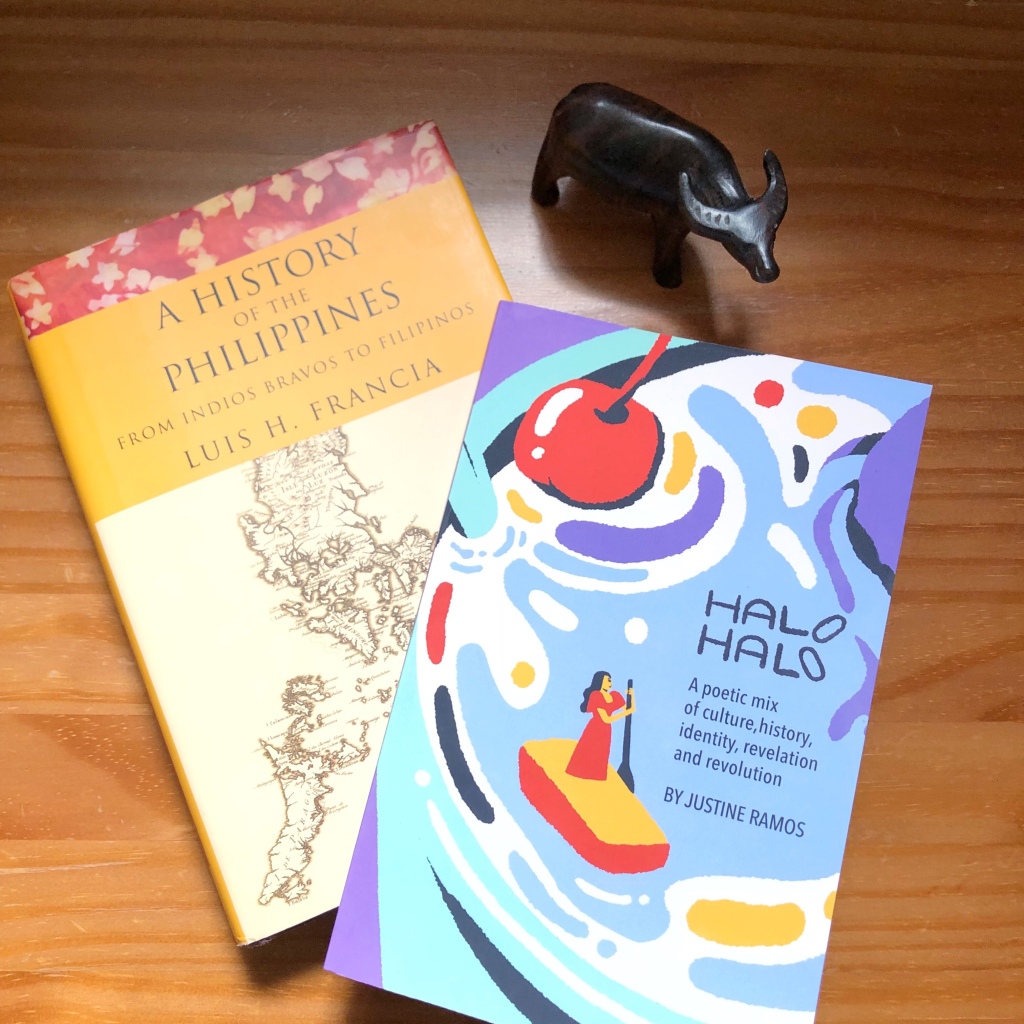
A History of the Philippines: From Indio Bravos to Filipinos, by Luis H. Francia

This book dives into the history of the Philippines from pre-colonial days to the present. Though this is an amazing resource for a Filipinx wanting to learn about their ethnic heritage, this is a book for everyone. By including perspectives and parts of stories that were left out of our history textbooks in the US, it challenges the way we view European and American history and adds insight to discussions about racism, colonialism, militarism, and even missiology.

Halo-Halo: A poetic mix of culture, history, identity, revelation, and revolution, by Justine Ramos

This is the book I mentioned earlier with the poem called, “Ferdinand Magellan.” In a podcast, I heard Ramos talk about how publishers told her that her themes were for “too specific of an audience” and that she should try to write for a wider, more general audience. I’m so glad she didn’t diminish the power of her words by diluting her creativity! This book is a work of art. Through her slam-style poetry, Ramos gives insight into the experiences and psyche of the Filipinx diaspora. At times, her words feel like lament. Other times, like revolutionary anthems. This book was like a healing balm to my soul.

In the Author’s Note, she wrote:

“My poetry is dedicated to all the textbooks that left my country and culture out of the narrative. My poetry is devoted to anyone who has ever uttered “Hirap Buhay ‘Merica” [“Life’s Hard in America] under their breath…As you turn the page, you’ll read snippets of frustrations and reflections. You’ll read flashes of my childhood, a peek into the crevices of my heart and memory. You’ll hear outrage, hope, and a desperate call for advocacy and awareness. These pages contain the tears of those who have lost a sense of themselves, those who have let the world define who they are, and the strength of those who, like me, are on the journey of finding themselves again.”

WHAT ABOUT YOU?

Are you on a journey of reclaiming your identity? What are you doing to reclaim the pieces of your story and culture you have lost, forgotten, or never had? I’d love to hear from you! (You can share in the comments.)

What Silence About Racism Sounds Like (and Words BIPOC Need to Hear)

“We must always take sides. Neutrality helps the oppressor, never the victim. Silence encourages the tormenter, never the tormented. The opposite of love is not hate, it’s indifference.”

~Elie Wiesel, Holocaust survivor and winner of the Nobel Peace Prize in 1986

As a woman of color navigating all the ways this past year has brought my racial pain and trauma to the surface, there are words I need to hear from the people in my life:

“I see you.”

“I’m here for you.”

“I’ve got your back.”

For those of you who are leaders, I need to hear the same from the leadership of the organizations and institutions I’m part of:

“We see you.”

“We’re here for you.”

“We’ve got your back.”

Why is this so important? Because, as Elie Wiesel states, “Silence encourages the tormenter, never the tormented.” For me personally, when the people in my life or the organizations I’m part of offer silence in response to racial pain, what I hear is NOT compassion or empathy. What I hear is:

They do not see me.

They are not here for me.

They do not have my back.

My journal is a place where I feel freedom to express all the things I’m too timid or scared to say out loud. Over the past year, I’ve written in my journal, “I wish they would try. But in order to try, they’d first have to care. And I don’t know anymore if I believe they care.”

So if you care, please don’t believe the lie that silence is the best option. At the least, it can be hurtful (or even feel like betrayal) to those who are hurting. At most, it can embolden those who have deep racism in their hearts and desire to harm racial minorities. Say something!

I know that some of you are reading this and thinking, “I’ve wanted to say something to my friends (or the people I lead) who’ve been hurting during this season, but I haven’t been able to find the words.” I get that. It can be scary to want to say something but to also be afraid of saying the wrong thing. If coming up with the “right” words has felt like an overwhelming and impossible task for you, or if you read the three sentences I shared earlier and thought, “That’s what I’ve been trying to say but I didn’t know how!”โ€”you’re welcome to use them! It doesn’t have to be word-for-word exactly what I wrote. There are so many ways you can express these messages! The important thing is to express them and mean them!

Let’s take a closer look at these three sentences:

“I see you.”

This is the bare minimum. This shouldn’t be controversial. Yet, unfortunately, I know that for some, it is. If you love someone, these words should be easy. The other two sentences are dependent on this one. “I see you” can sound like:

  • “I’m listening.”
  • “I see your pain. I’m so sorry you’re going through this.”
  • “I see the image of God in you.”
  • “I see your uniqueness. I see your beautiful personality, your giftings, what you bring into a room, the ways you make me better.”

Note: In addition to silence, there are many ways to convey, “I don’t see you.” Some of those ways include arguing instead of listening, gaslighting, defensiveness or making it about yourself when people are sharing their stories of pain with you.

“I’m here for you.”

This one takes a little bit of time, effort, and compassion. This looks like sitting with someone’s painโ€”even if it’s uncomfortable. “I’m here for you” can sound like:

  • “If you need to cry or vent, I’m here.
  • “Can I give you a hug?”…when it’s safe to do so.
  • “Can I bring you coffee or a meal?”

“I’ve got your back.”

This one takes some courage. You might get some pushback from those who haven’t taken the time to examine their negative racial biases. But know this: The dignity and worth of BIPOC are worth it! In addition to using your voice to speak up, “I’ve got your back” can sound like:

  • “I want to be your ally.”
  • “I want to grow in this area so I can do better.”
  • “I want to protect you. I will come to your defense if someone tries to harm you.” (These words need to be backed up by action if the opportunity arises!)
  • “Can I sit with you at church?” Or, “Can I come with you when you go to [insert place where they may need an ally to help them feel safe]?”
  • “I want to give action to my words. I don’t just want to say things need to be better; I want to do concrete things to help bring change.”
  • “We need your voice! I’m going to amplify your voice any way I can!”
  • If you’re in a position of leadership: “How can we do better?” and “How can we come alongside you?”

One more thing: If you can’t mean these words, please don’t say them. I don’t mean that as a slam. It takes repentance and work over time to be able to say each of these things. It’s also a progression: You can’t have someone’s back when you’ve never been (or aren’t at least willing to be) there for them. And you can’t be there for them if you don’t see them (which includes seeing their pain). So if these are words you’ve never said to someone experiencing racial pain or trauma, start by prayerfully examining yourself and asking God, “Since words are the overflow of the heart, what in my heart (and mind) needs to change so I can say these words?” If you can say, “I see you,” but you don’t think you can honestly say, “I’m here for you,” or “I’ve got your back,” bring that to God and be honest about why you feel that way. And then let God shine a light on everything in your heart that wants to hide. Will it be easy? No. But will it be worth it? Yes!

This is where healing begins.

What Does Loving One Another Look Like?

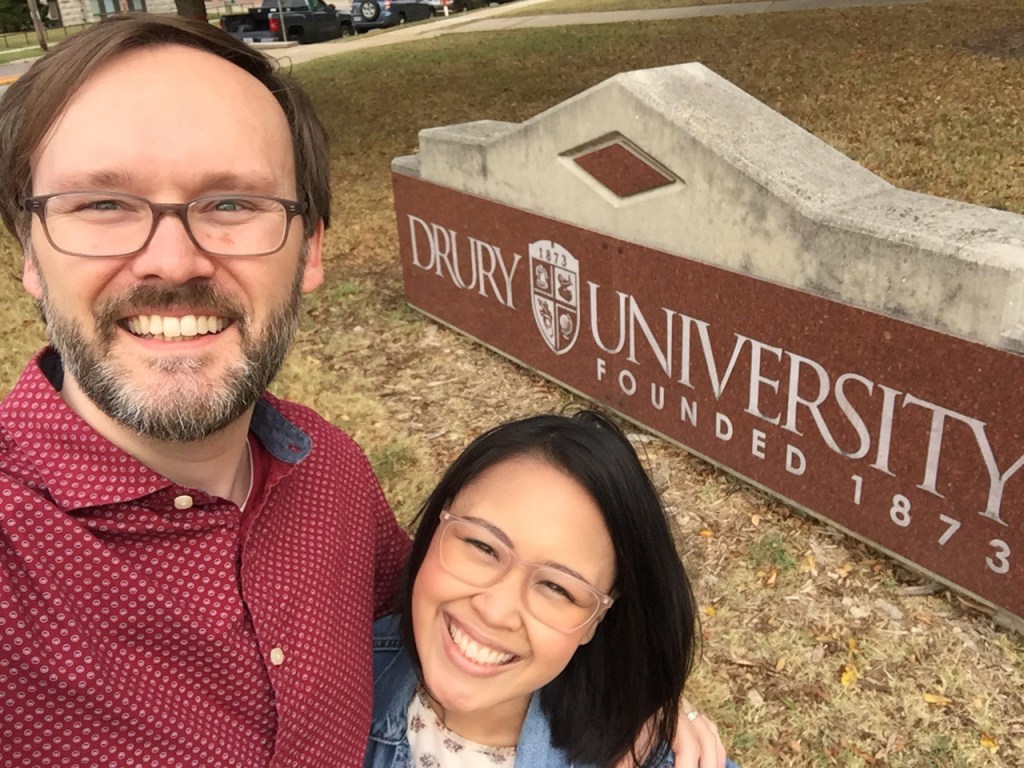
The following is a message I shared in a Drury University chapel service this week. This semester, the theme many of the speakers are exploring is “One Another.” And for anyone reading this who has taken a homiletics class (or four), yes, I realize this message isn’t “balanced” in that it’s extremely heavy on application. On the other end of the spectrum, I hate that I ended up with three points! (I typically go for a more story-like structure that takes you from point A to point B.) Moral of the story: Say the thing God wants you to say through whatever structure communicates it best!

Thereโ€™s a phrase we often use when we talk about what being a Christian is: โ€œpersonal relationship with Jesus.โ€ But what does that really mean?

It means we can know Jesusโ€”not just know about Jesus, but we can know Himโ€”personally. We donโ€™t need someone to mediate for us. Heโ€™s not distant. He is the God who is with us. One of Jesusโ€™ last words to the disciples before He ascended to Heaven is, โ€œBehold, I am with you, even to the end of the age.โ€ Heโ€™s not just with us in an ethereal sense; we have the freedom to approach Him and talk to Him whenever we want. The idea that we can have a personal relationship with God is a distinctive of Christianity.ย 

The problem with the phrase, โ€œpersonal relationship with Jesus,โ€ is that we live in an individualist and consumerist culture. And it becomes easy for us to look at our personal relationship with Jesus with me-centered eyes.

Being a follower of Jesus is bigger than โ€œme and Jesus.โ€ Being a follower of Jesus means being part of something bigger than ourselves. 

So here are a couple questions Iโ€™d like you to consider: Do people know you have a personal relationship with Jesus? And if they do, how do they know?

  • Because you told them youโ€™re a Christian?
  • Because you post Christian things on social media?
  • Because you go to church or pray before you eat a meal?
  • Or because when they think of you, they think of someone who loves well?

In John 13:34-35, Jesus said:

I give you a new command: Love one another. Just as I have loved you, you are also to love one another. By this everyone will know that you are my disciples, if you love one another.

In Matthew 22: 35-40, Jesus articulated the two greatest commandments:

…an expert in the law, asked a question to test him: โ€œTeacher, which command in the law is the greatest?โ€

He said to him, โ€œLove the Lord your God with all your heart, with all your soul, and with all your mind. This is the greatest and most important command. The second is like it: Love your neighbor as yourself. All the Law and the Prophets depend on these two commands.โ€

Isnโ€™t it interesting that these two commands that all of Godโ€™s other commands depend on are both relational and social?

In Matthew 5:43-45, Jesus went so far as to say:

You have heard that it was said, Love your neighbor and hate your enemy.  But I tell you, love your enemies and pray for those who persecute you, so that you may be children of your Father in heaven.

Later, in Galatians 5:22, Paul described the fruit of the Spiritโ€”one fruit with nine qualities. And whatโ€™s the first quality of the fruit of the Spirit? Love.

What marks us as Christians isnโ€™t our piety, how often we go to church, or even our spiritual disciplines. Those things are important and have their place, but theyโ€™re not what marks us as Christians. The mark of being a follower of Jesus is love. 

And as followers of Jesus, love is the thing out of which everything we do flows. 

So I want to spend the rest of this time exploring this question: What does loving one another look like?

This isnโ€™t going to be exhaustive, but I hope to give you a glimpse of what loving one another can look like and to challenge you to love others more deeply.

Loving one another looks like empathy and presence.

The Bible uses a lot of metaphors to describe the Church and one of them is the concept of family. When Jesus taught His disciples to pray, He taught them to open with the words, โ€œOur Father.โ€ He could have taught them to say, โ€œMy Father,โ€ but a personal relationship with God isnโ€™t just, โ€œMe and God.โ€ Like I said earlier, having a personal relationship with God means that we can know God personally, but it means more than that. It means that we are members of Godโ€™s family. 

This past month, my husband and I were in Alabama to mourn the loss of my father-in-law. Because Alabama is farther along in the vaccine rollout, we were able to hold a service that people were actually able to attend. And it was beautiful to see what kind of people came.

There were people who lived locally whom my mother-in-law hadnโ€™t seen in decadesโ€”people who had worked with my father-in-law at the first company he worked at after college. They showed their love just by being there.

And then there was one of my husbandโ€™s cousins. To give you some context, my father-in-law was one of twelve, so my husband has a LOT of cousins! Weโ€™ve been married for almost 18 years and I still canโ€™t keep them all straight. In fact, there are cousins I havenโ€™t even met yet! Of the cousins my husband actually has a relationship with, there were a number of them we expected to see because they live in the area. But there were a couple that came that were a complete surprise because they had to travel (in a pandemic!) to be there. As we spoke with one of them, he told us what compelled him to make the trip to be there: โ€œThese are the cousins I know.โ€ I met this same cousin when Daniel and I got married. He had to travel a far distance to come to that, too. So he has both celebrated with us and mourned with us. 

Loving one another means seeing people where theyโ€™re at and choosing to be with them, rejoicing with them when they rejoice and mourning with them when they mourn. Loving one another looks like empathy and presence.

Loving one another looks like living for something bigger than ourselves.

How do we do that? Through our choices. 

The choices we make arenโ€™t just about us. Thereโ€™s no, โ€œIโ€™m making this choice for me.โ€ Our choices impact those around us. 

Are there choices we make that donโ€™t matter? Sure! A few weeks ago I bought a purse and had to choose whether I wanted the brown one or the black one. Neither one of those choices make a difference in how well I love. 

Now I will say, there was another purse Iโ€™d been eyeing for monthsโ€”stay with me hereโ€”but it was way out of my budget. So if I would have bought that other purse, it would have meant less money in the bank. The purse I ended up buying was almost exactly the same as the one I was eyeing except it was a different color and it was 75% off, so I could make it work within our budget. And why does it matter that I made a choice to work within our budget? Because Iโ€™ve been wanting to live more generously. And staying within our budget gives us more room to be generous and to love others better. 

A completely unspiritual choice can open up possibilities for spiritual things! 

Our choicesโ€”even some that we think donโ€™t really matterโ€”impact those around us.

Last Friday, I got my second vaccine shot. As I was getting it, I started tearing up and said to the nurse, โ€œIโ€™m getting emotional!โ€ And she said, โ€œThatโ€™s understandable! Youโ€™ve never lived through anything like this before.โ€ And then she said something that made me tear up even more: โ€œJust think about the difference youโ€™re making!โ€

As weโ€™ve navigated the pandemic over the past year, weโ€™ve seen a lot of opinions about wearing masks, whether or not we should get the vaccine, and a gajillion other things. Iโ€™m not here to make a partisan argument. Science is important. The Constitution is important. And itโ€™s okay if we have convictions about those things. Itโ€™s okay for science or the Constitution to be a reason why you advocate for something.  But as Christians, the thing that should be our primary, core motivation, the motivation that trumps all others, the thing that most compels our actions…is love.  

You see, if we advocate for science but without love, or if we advocate for the Constitution but without love, we can cause a lot of destruction.

If you study history, it doesnโ€™t take long to see ways that both science and the Constitution have produced some bad fruit and have been used (and at times, manipulated) to justify some awful things, from slavery to the use of atomic bombs.

But when our core motivation is love: 

  • instead of destruction, we create;
  • instead of despair, we bring hope;
  • and in a world that is broken, we bring healing.

Loving one another looks like empathy and presence. It looks like living for something bigger than ourselves. And…

Loving one another looks like allowing God to transform us when itโ€™s hard to love.

Our world is divided. And one of the things that has broken my heart over the past year is to see all the ways that the Church is divided, too.

Thereโ€™s so much fear, anger, and hate. And Iโ€™m gonna to be honest: as a woman of color, it has been a struggle to love. People I disagree with who arenโ€™t Christian? I can love themโ€”easy. But Christians who post racist or misogynistic things on social media, people who marginalize me within Christian spaces and force me to defend the dignity and worth of myself and others who look like me, people for whom I think, โ€œTheyโ€™re Christians! They should know better and do better!โ€ Not easy. 

I donโ€™t know who you struggle to love, but know that your struggle doesnโ€™t make you a bad Christianโ€”it makes you human. Opening our hearts to love people also means opening our hearts to be hurt by people. And unfortunately, some people do a lot of damage and never repent, never try to be better, never try to fix what they broke, never even say sorry. 

So what do we do about people who are hard to love? We canโ€™t will ourselves to love better! We canโ€™t love our enemies or the people whoโ€™ve hurt us without Godโ€™s help. 

Start by bringing your honest, unfiltered feelings to God. Donโ€™t hold anything back from Him. If you want to learn how to do that, the Psalms are a great place to start. Thereโ€™s no human emotion that isnโ€™t expressed somewhere in the pages of the Psalms. God gave space for celebration, joy, and hopefulness. But He also gave space for lament, sadness, discouragement, depression, anger. And if God gave space for those emotions in the Bible, we can know that God gives space for those emotions in us as well. Our emotionsโ€”even the dark ones we try to hide from other peopleโ€”are safe with God. Sometimes we think, โ€œI donโ€™t want to have this emotion, so Iโ€™m going to ignore it and pretend itโ€™s not there.โ€ But thereโ€™s a better way. You donโ€™t have to hide those things from God. 

When you give God access to those parts of yourself, you also give space for Him to heal and transform youโ€”not with a neat and tidy bandaid, but with true healing. And when we experience Godโ€™s healing and transformation, we can truly love. 

So what does this look like? We can pray, โ€œGod, I really wish this person or these people would [insert all the dark stuff you donโ€™t want to wish on them but deep down you really do].โ€ And feel safe in the knowledge that God wonโ€™t be surprised by any of those thoughts or feelings because He already knows you have them! Itโ€™s not about telling God so He can see them. Itโ€™s about telling God so you can give Him access to every single part of your heart. And when youโ€™ve laid it all before God, ask Him to do His work in and through those painful thoughts and emotions.

As you pray for people who are hard to love, you might need to start by praying for God to help you to be able to pray for them! 

And then over time, you can try praying for God to change their heartโ€”for them to see the harm theyโ€™ve caused and to come to a place of repentance. And maybe one day, you can even come to a place where you can pray for their well-being and flourishing wherever they are.

And even if they never change, you want God to have access to heal and transform the part of your heart that was hurt by themโ€”not to excuse what theyโ€™ve done, but so the hurt they caused doesnโ€™t hold you back from being able to love others and to also be able to receive love from others.

Because love is our purpose and calling as followers of Jesus. Itโ€™s even our birthright as children of God because weโ€™re not just meant to give it but to also receive it.

Soโ€ฆ

Letโ€™s love one another with empathy and presence.

Letโ€™s love one another by living for something bigger than ourselves.

And letโ€™s even allow God to transform us when itโ€™s hard to love.

Stories of Why Asian Representation Matters

I wrote these words and shared many of them on social media before the Atlanta massacre on March 16, 2021. I considered waiting until a later time to share them on my blog. But one thing the recent tragedy has brought to light is how the limited representation of Asian Americans combined with the weaponizing of terms such as “Kung Flu” and the fetishizing of Asian women has done tremendous harm and has even put lives in danger. I hope that by sharing stories like these, maybe we can start to cultivate change.

Story No. 1:

I went to an art supplies store to look for a certain set of markers that included nine skin tone colors. No luck. The closest thing I found was a six-piece set of skin tone colorsโ€”the darkest color a medium brown and none of them were even close to matching mine. I gave up and left the store with a single, green marker for coloring pictures of leaves.

When I got home, I did a search on the internet and found Crayolaโ€™s Colors of the World collectionโ€”24 beautiful shades ranging from porcelain to deep browns. As I added the marker and colored pencil sets to my Amazon cart, I found myself getting emotional. Memories of drawing self portraits in art class and awkwardly staring at the peach and brown crayons, decades of trying to lighten my skin and avoiding letting my skin tan, years of feeling ugly because โ€œbeautifulโ€ photos didnโ€™t include women who had any features that looked like mine. I confronted it all with my Amazon cart. (โ€œMedium deep goldenโ€ is the color of me!)

Story No. 2:

When I heard about Raya and the Last Dragon for the first timeโ€”the movie with the first Southeast Asian Disney princessโ€”I cried. Full-on, intense, happy tears. I turn 40 this year and Iโ€™ve waited my entire life for this! I wish I could tell little, seven-year-old me (or even 25-year old me) that one day my dream would come true. A strong Disney princess who has brown skin and a nose like mine, eats congee, and even has some Filipino martial arts movesโ€”what a time to be alive!

Iโ€™m the daughter of Filipino immigrants and most of my closest friends growing up were also the children of Filipino immigrants. They were like cousins and their parents became surrogate titos and titas. I grew up feeling very connected to my Filipino heritage. Now I live hundreds of miles from home in one of the whitest cities in America where I have one Filipina friend. We got to watch Raya together while eating halo-halo.

Bonus: I think getting to watch her four-year-old daughter get into the movie moved me as much as the movie did! Watching this little girl gaze at Raya gave me hope. She’s growing up in a very different world than the one I grew up in, a world where “beautiful” includes her and she’s empowered to be strong.

(And in case youโ€™re wondering, Raya and the Last Dragon was wonderful and lived up to the hype!)

I’ll leave you with a couple thoughts to consider:

  • Representation matters because people matter. Every single person is created in the image of God. Our ethnicities are a part of the way we reflect the Imago Dei. To diminish anyone’s ethnicity is to diminish the Imago Dei in them.
  • Representation for people of color doesn’t mean removing representation of White people. There is space for all of us! The attitude that White people lose if people of color get a seat/voice is scarcity mentality and is antithetical to the Gospel and the Kingdom.

The name of this marker is โ€œmedium deep goldenโ€ and it’s the color of me!

An Asian American’s Awakening

What follows is something I wrote months ago when America was reeling and grappling with questions about race. I’ve been unsure of whether or not I wanted to share these words. They’re not exactly “on brand” for my blog. And as time continued to pass, I thought maybe these words would feel like I was trying to talk about something people have moved on from. But then a friend experienced something. Something I’ve experienced and wrote about in these paragraphs.

Iโ€™m done hiding. 

During this season, Iโ€™ve been taking a hard look at ways Iโ€™ve chosen to โ€œassimilateโ€ into white culture (or rather, hide my Filipino-ness). 

Being a woman of color in predominantly white spaces is tricky. I rarely experience explicit hatredโ€”that doesnโ€™t mean it has never happenedโ€”but there are things that lie under the surface. The often asked โ€œWhere are you really from?โ€ and โ€œDid your husband meet you on the mission field?โ€ remind me that for many, Iโ€™m forever a foreigner. I was born here. This is my home, but I donโ€™t really belong. 

And then thereโ€™s the issue of whatโ€™s safe for me to talk about. I learned early that to talk about my heritage is taboo. Friends could talk freely about the culture of whatever European country their ancestors hailed from, but conversations about my Filipino heritage were unwelcome. This unwelcoming would manifest in a few ways: being made fun of, being told to โ€œgo back to my country,โ€ or someone quickly changing the topic. (Note: As for someone quickly changing the topic, this was never something someone would do only once. They never allowed me to speak openly about my heritage even when they spoke openly of theirs).

And then thereโ€™s the perceived language barrier. The key word: โ€œperceived.โ€ I speak fluent English with good grammar and a Midwest accent. Yet people still ask me, โ€œDo you understand English?โ€ Itโ€™s difficult to prove my intellect to someone who struggles to believe I understand the language Iโ€™m speaking fluently. In a similar way, thereโ€™s also an assumption that Iโ€™m ignorant of American history and culture. As for culture, I get that things were different in my house as both my parents are immigrants. But outside of my house, everything in my life was as โ€œAmericanโ€ as my white counterparts. In fact, because I had to go back and forth between the Filipino culture inside my home and the American culture outside my home, I grew up with a greater awareness of cultural elements many people take for granted and donโ€™t notice.

I was talking about this to a friend recently. Sheโ€™s Chineseโ€”born and raised in Chinaโ€”and moved to the US as a grad student. When she heard my experiences, she said, โ€œIโ€™m glad Iโ€™m not an Asian American! That sounds really hard!โ€ To have to hide an integral part of who I am…Yes, itโ€™s hard.

Over the years, Iโ€™ve been extra careful to not assume someone was treating me a certain way just because of my race. It gets hard when Iโ€™m in a store and a worker follows me around. One store clerk yelled at me while I looked at skirts. Or the many times when Iโ€™m in a womenโ€™s boutique and none of the workers will give me service of any kind unless my white husband says to them, โ€œCan one of you please help my wife?โ€ I try to ignore this stuff, smile, and move on. 

Iโ€™ve found ways to adapt. Iโ€™ve assimilated. Or rather, Iโ€™ve hidden my Filipino-ness. Iโ€™ve dropped Filipino mannerisms. I eat with my hands far less than I used to. Iโ€™ve avoided the sun to ensure my skin stayed as light as possible (and Iโ€™ve used papaya soap to try to lighten it even more). Iโ€™ve done whatever I could to blend into predominantly white surroundings. And because of this, it has been easy for some people to forget that Iโ€™m not white. Someone actually told me, โ€œWhen I see you, I donโ€™t see an Asian; I just see a white girl.โ€ Donโ€™t get me started on all the ways that statement is so so SO wrong. And thatโ€™s the thing: Iโ€™m NOT white. Iโ€™m 100% Filipino. So if you canโ€™t see my Filipino-ness, you canโ€™t see me. (Iโ€™m also 100% American. So if you look at me and only see ways Iโ€™m other, you canโ€™t see me either.)

So Iโ€™ve made a decision: Iโ€™m not hiding anymore. What does that mean? Iโ€™m not really sure. Iโ€™m just gonna let this journey take me where it will. 

Prophesying (And What the Bible Actually Says about Prophecy)

Each year I pray for God to give me a word. A word to internalize, grow into, and live out. A word that can bring me focus as I navigate the challenges the year will bring. What was the word God gave me for 2020? Prophesy.

Seriously, God? It seemed too weird. Growing up in the 80s and 90s, I saw a lot of false prophets and predictions. (Anyone remember all the prophesies about how the world would end and Jesus would come back at Y2K?) Even though I believe some prophets and prophecies are real and biblical, Iโ€™ve seen enough falsehood, abuses of Scripture, and weirdness to have a skeptical view of people who proclaim themselves to be prophets or to have “a word from the Lord.” And let’s not forget the fact that the Bible has some harsh words for false prophets!

“But the prophet who presumes to speak a message in my name that I have not commanded him to speak, or who speaks in the name of other godsโ€‰โ€”โ€‰that prophet must die.โ€™ You may say to yourself, โ€˜How can we recognize a message the Lord has not spoken?โ€™ When a prophet speaks in the Lordโ€™s name, and the message does not come true or is not fulfilled, that is a message the Lord has not spoken. The prophet has spoken it presumptuously. Do not be afraid of him.”

Deuteronomy 18:20-22

Suffice it to say, when I sensed God speaking the word “prophesy” to me, I said, “Thanks, God, but no thanks! Can you give me a different word? One that isn’t so weird or scary?”

God didn’t answer this last request. He didn’t need to; He knew what I would need. More than that, He knew how this year would unfold and that the people in my sphere of influence would need a prophetic voice. So He continued to whisper the same word in my heart again and again. And He pointed me to a passage of Scripture that felt like fire every time I came across it. Sermons, books, wherever I lookedโ€”it felt like I couldn’t get away from it!

“Pursue love and desire spiritual gifts, and especially that you may prophesy. For the person who speaks in a tongue is not speaking to people but to God, since no one understands him; he speaks mysteries in the Spirit. On the other hand, the person who prophesies speaks to people for their strengthening, encouragement, and consolation. The person who speaks in a tongue builds himself up, but the one who prophesies builds up the church. I wish all of you spoke in tongues, but even more that you prophesied. The person who prophesies is greater than the person who speaks in tongues, unless he interprets so that the church may be built up.”

1 Corinthians 14:1-5

“Pursue love and desire spiritual gifts, and especially that you may prophesy.”

In my resisting, God was relentless. (That’s one of the ways I know I’m not just making stuff up and God’s really speaking to me.) I came to a point where I couldn’t shake His voiceโ€”I didn’t want toโ€”and I gave in. My giving in to God was part reluctance, but bigger part expectation that God knew what He was doing and had something in store.

Prophesy. Not “prophet.” Not “prophecy.” The word He gave me was a verb, an action word. And shortly after I gave in to God, March 2020 happened. The world was reeling from a global pandemic and America went into lockdown. And in the following months, America began to reel even more as racial injustice was recorded for all to see and people cried out in the streets. All of this and so much more in a crazy election year. And in the midst of everything, God didn’t want me to be a passive observer; He wanted me to do something.

You may be thinking, “If God gave you the word “prophesy” for the year of 2020, shouldn’t you have seen everything coming?” When you read the prophetic books in the Bible, you find that even though part of their message included predicting future events, the bulk of their messages consisted of critique and hope.

Did I see the crazy before it all happened? Not quite. But at every turn this year, I’ve felt ready. Not just ready to go through each challenge with a peace and purpose, but also ready to care for and appropriately speak into the lives of the people God has called me to love and lead.

“The Lord God has given me

the tongue of those who are instructed

to know how to sustain the weary with a word.

He awakens me each morning;

he awakens my ear to listen like those being instructed.”

Isaiah 50:4

In June of this year (the month when racial injustice was brought into the light and couldn’t be ignored any longer), I was reading the book of Jeremiah. That was a difficult month for me. I was heartbroken and angry about all of the injustice. I felt disillusioned as a large number of Christians (including leaders) said things that completely contradicted what I was reading in the Bible. And then I’d see other Christians who had the courage to speak up, only to get torn down by their Christian brothers and sisters. And each day as I continued to wade through the long book of Jeremiah, I found myself feeling more disillusionedโ€”not by God, but by people who violated His word in His name. And all I could do was lament.

Looking through the lens of the word “prophesy”โ€”along with diligent study of what the Bible has to say and taking the time to hear God’s voice on the matterโ€”has given me a unique perspective of this year. At times, it has allowed me to see with expectation (even excitement) during times when many have felt anxious and afraid. At other times, it has caused me to have caution when some have declared, “Everything’s looking up now!” And when there has been a rise of people declaring to have had prophecies or dreams of what is to come, I’m finding it easier to discern when it’s time to listen, when something needs to be put on a shelf for later, or when something needs to be corrected or discarded. Most importantly, in the midst of a difficult year, it has helped me to hold the tension of both lament and hope.


What follows are passages from the Bible that talk about prophets and prophesying. This isn’t exhaustive by any means. These are simply some of the passages that have stuck out to me this year as I’ve explored what it means (and what it doesn’t mean) to prophesy.

The entire book of Jeremiah is a great starting point. It’s like a narrative textbook on what it means to be a prophet. There’s way too much gold in this book to put in a single blog post, so I’ll just share some highlights.

The life of the prophet isn’t easy. These words from God to Jeremiah give insight into one of the challenges that comes with being a prophet:

โ€œWhen you speak all these things to them, they will not listen to you. When you call to them, they will not answer you. Therefore, declare to them…”

Jeremiah 7:27-28a

The words God gave Jeremiah to preach weren’t easy for people to digest. (He foretold of invasion and exile and preached a message of repentance from idolatry, oppression, and injustice.) On the other hand, Judah’s leaders were saying things that seemed more optimistic or faith-filled. But the words of these leaders didn’t come from God and weren’t rooted in the truth.

“They have treated the brokenness

of my dear people superficially,

claiming, โ€˜Peace, peace,โ€™

when there is no peace.”

Jeremiah 8:11

And notice what God said about people who were falsely “prophesying” in Jeremiah’s day:

“This is what the Lord of Armies says: ‘Do not listen to the words of the prophets who prophesy to you. They are deluding you. They speak visions from their own minds, not from the Lordโ€™s mouth. They keep on saying to those who despise me, “The Lord has spoken: You will have peace.” They have said to everyone who follows the stubbornness of his heart, “No harm will come to you.”

For who has stood in the council of the Lord

to see and hear his word?

Who has paid attention to his word and obeyed?’

Jeremiah 23:16-18

God goes on to say what the effect a true prophet, someone who has stood in the council of the Lord, would have on people:

“If they had really stood in my council,

they would have enabled my people to her my words

and would have turned them from their evil ways

and their evil deeds.”

Jeremiah 23:22

Moving beyond the book of Jeremiah…For all those who think they have a prophecy from God because, like Michael Scott, they declared it:

“Above all, you know this: No prophecy of Scripture comes from the prophetโ€™s own interpretation, because no prophecy ever came by the will of man; instead, men spoke from God as they were carried along by the Holy Spirit.”

2 Peter 1:20-21

Jesus warned his followers about false prophets and told them how they could recognize them:

“Be on your guard against false prophets who come to you in sheepโ€™s clothing but inwardly are ravaging wolves. Youโ€™ll recognize them by their fruit.  Are grapes gathered from thornbushes or figs from thistles? In the same way, every good tree produces good fruit, but a bad tree produces bad fruit. A good tree canโ€™t produce bad fruit; neither can a bad tree produce good fruit. Every tree that doesnโ€™t produce good fruit is cut down and thrown into the fire. So youโ€™ll recognize them by their fruit.

Matthew 7:15-20

You’ll recognize them by their fruit. There are a lot of places in the Bible that talk about fruit. The most famous of these passages is in Paul’s letter to the Galatians. When it comes to prophets, pay attention to the fruit:

“But the fruit of the Spirit is love, joy, peace, patience, kindness, goodness, faithfulness, gentleness, and self-control.”

Galatians 5:22-23

Earlier I quoted 1 Corinthians 14:1 where Paul wrote, “Pursue love and desire spiritual gifts, and especially that you may prophesy.” God gives some people the gift of prophecy to build up the Church. But we shouldn’t be naive and listen to everyone who claims to be a prophet with a “word from the Lord.” So what should we do when someone has a message?

“Donโ€™t stifle the Spirit. Donโ€™t despise prophecies, but test all things. Hold on to what is good.

1 Thessalonians 5:19-21

Test all thingsโ€”every prophecyโ€”and take note: Does this line up with the heart of Scripture? What kind of fruit do I observe? If it includes a prediction, did it come true? And when you test all things, hold on to what is good. Speaking of holding on to what is good, as Paul writes to Timothy, a young minister he mentored, he gave a glimpse of the good that prophecies hold:

“Timothy, my son, I am giving you this instruction in keeping with the prophecies previously made about you, so that by recalling them you may fight the good fight…”

1 Timothy 1:18

One last thing…

If you feel like God is asking you to prophesy, first pray for God to give you discernment so you can know the difference between His voice and your own. (Double check to make sure that word that’s burning in your heart actually came from Him.) And then, if you still feel God has given you a prophetic word to share, courageously obey His voice. And as you prophesy, trust God to deal with the hearts of others while paying attention to the fruit that flows from your own.