
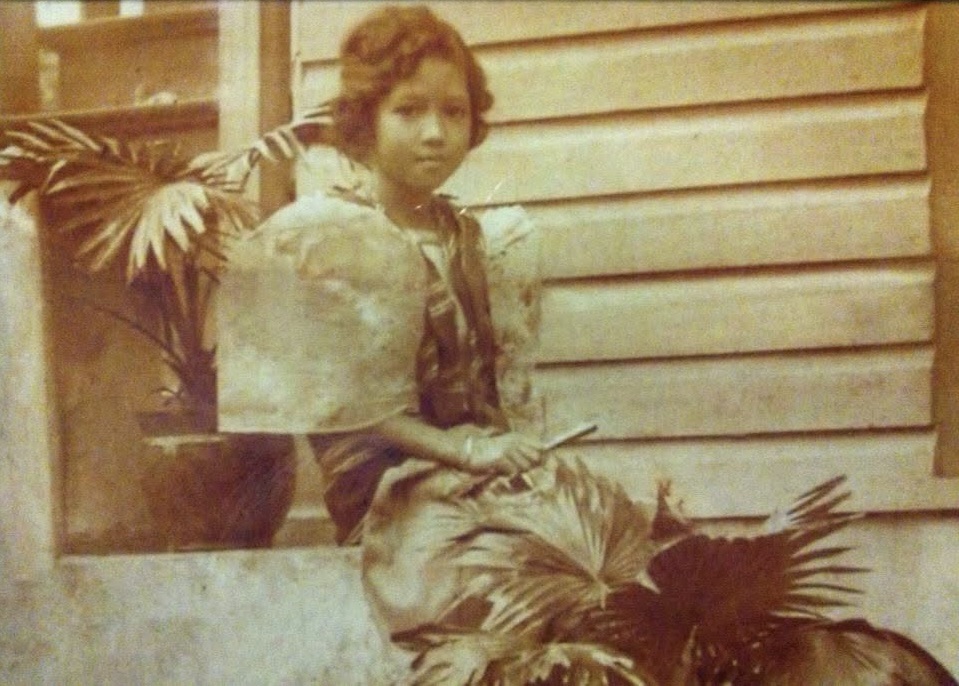
My name is Esther. I was named after a White, American, Assemblies of God missionary. She was the pastor’s wife at the church in the Philippines where both my parents were saved and got married. My father grew up in this church. His mother, Nanay Ching, was one of the founding members when this church was planted in the 1950s by an American missionary. Nanay Ching became the church’s head treasurer. She was a pillar of the church, a prayer warrior, called a mother by all who knew her.
When I was a little girl, I have a memory of both Nanay Ching and the Esther for whom I was named visiting my family in Chicago. Standing outside my church after the Sunday service, these two mighty women of God held hands and my grandmother said to me, “This is my best friend.”
I’m as AG as one could get: I went to kids camp where I was filled with the Holy Spirit with the physical evidence of speaking in tongues. I went to youth camp where I experienced the call of God to be a preacher of the Gospel. I did Teen Bible Quiz, memorizing the book of John, yet scoring badly in meets. I won Fine Arts twice. I graduated from Central Bible College with a degree in Preaching and Evangelism. Because music is one of my favorite languages with which to declare the mysteries of the Gospel, I got a master’s degree in piano performance. And though the many hours of practicing was brutal on my hands that were already showing signs of lupus before I knew I had lupus, I still played on the worship team at my AG church on Sundays and Wednesdays. Whether I found myself in a church or college campus, I’ve been obedient to God’s call on my life. Today, I’m on staff at a campus ministry at Princeton University. All because of an Assemblies of God missionary who started a church in Manila, Philippines and the Assemblies of God missionaries who continued that work.
Somewhere in the midst of my life story, my husband and I ended up moving to the Philippines to join the pastoral staff at that church. One day one of the pastors I shared an office with was rummaging through one of the closets and shouted, “Oh, Pastora Esther! Look! It’s your video!” A VHS tape my dad made with a compilation of my performances and preaching, sent to my grandmother, made its way into the hands of the pastors of that church.
That church is no longer an Assemblies of God church. The story, which happened decades before my time there, is tragic and sad. I don’t know all of the details, and the details I do know are murky. But I do know that when we would visit my grandmother on our days off, she would say, “You’re Assemblies of God?”
“Yes, Nanay Ching. We’re Assemblies of God.”
And she’d lower her head and close her eyes as she’d say, “The Assemblies of God tried to steal from us.”
I do believe a lot of good changes have been made at an institutional level to not repeat some of the sins of our fellowship’s past. But there’s still something sinister lurking in the shadows, silently seeping into the handiwork of good intentions mixed with unexamined colonialism and paternalism.
I experienced it as a youth when a friend and I were invited to perform at a district council. My pastor introduced our families to some ministers and said, “Our church has a lot of ethnicities.” That statement filled me with pride, but I remember feeling uncomfortable as they gawked at us like we were oddities. And I guess, in light of what the people in the rest of the room looked like, we were.
I experienced it in Bible college when a number of my peers told me I needed to learn how to act more White.
I experienced it when my home church did a missions trip to the Philippines, a trip that would be especially meaningful to the Filipino-Americans going on that trip. Before that trip, the missionary visited our church to do a training for us. After the training, all of us (including the missionary) were invited to a party at someone’s house. My Filipino-American friends and our immigrant parents were horrified as the missionary participated in the karaoke, singing with a mocking, over-the-top, Filipino accent.
I experienced it when a missionary in residence at my Bible college said in front of the class, “This is how all Eastern people think. Right, Esther?” And then when he tried to explain to me how I think when I was stunned to silence.
Missionaries have been the most likely to doubt I’m fully proficient and fluent in English and to assume my husband met me when he was “ministering to me” in the Philippines. They struggle to believe my husband and I went to Bible college together (in America!) and graduated with the same degree.
I wish I could believe all ministers and missionaries always know what the people they minister to need most and what communicates dignity to them. I know many for whom this description is accurate, wonderful mentors and close friends for whom I’d take a bullet because they’ve loved me so well and I love them so. There’s one youth pastor—a lead pastor now—I feel especially indebted to. He took time to teach me homiletics (the art of preaching) when I was fifteen. He mentored me and took risks in giving me responsibilities. He helped carry my burdens and taught me by example what it means to love and pastor. And he pushed me to dig deeper and think more critically about Scripture. I honestly don’t think I’d be where I am today without his deep impact on my life decades ago.
I’ve seen the goodness that can be. But I’ve been cut and bruised by too many ministers and missionaries to give blind trust to all. I have caution. And when people show me who they are, I believe them.
I know a mighty woman of God who is brilliant, talented, and blind. Her name is Sarah Sykes Weingrtner. She wrote to me, “Still waiting and praying for the day they see us as full ministry partners rather than people who need to be reached.”
We don’t just want to be welcomed into spaces and to not be demeaned. That is too low a bar. We want more:
We want to be included in “us,” and not relegated to “them.”
We want to be counted as peers, not projects.
We want to be seen, to have seats at tables of decision, for our voices to be heard, and for our wisdom to be valued and heeded.
My dear Assemblies of God family, I’ve seen glimpses of what we could be, but we are not there yet. Maybe one day. With repentant humility and the transformative power of the Holy Spirit, let us work to make it so.
“Let us not get tired of doing good, for we will read at the proper time if we don’t give up. Therefore, as we have opportunity, let us work for the good of all, especially for those who belong to the household of faith.” ~Galatians 6:9-10 (CSB)
 Esther Guy